DIY Fest
Vol. I, DIY Fest

Making things, sharing skills, building community.

An editorial journal on Baltimore's DIY movement, the workshops that keep it alive, and the sustainable making practices shaping its future.

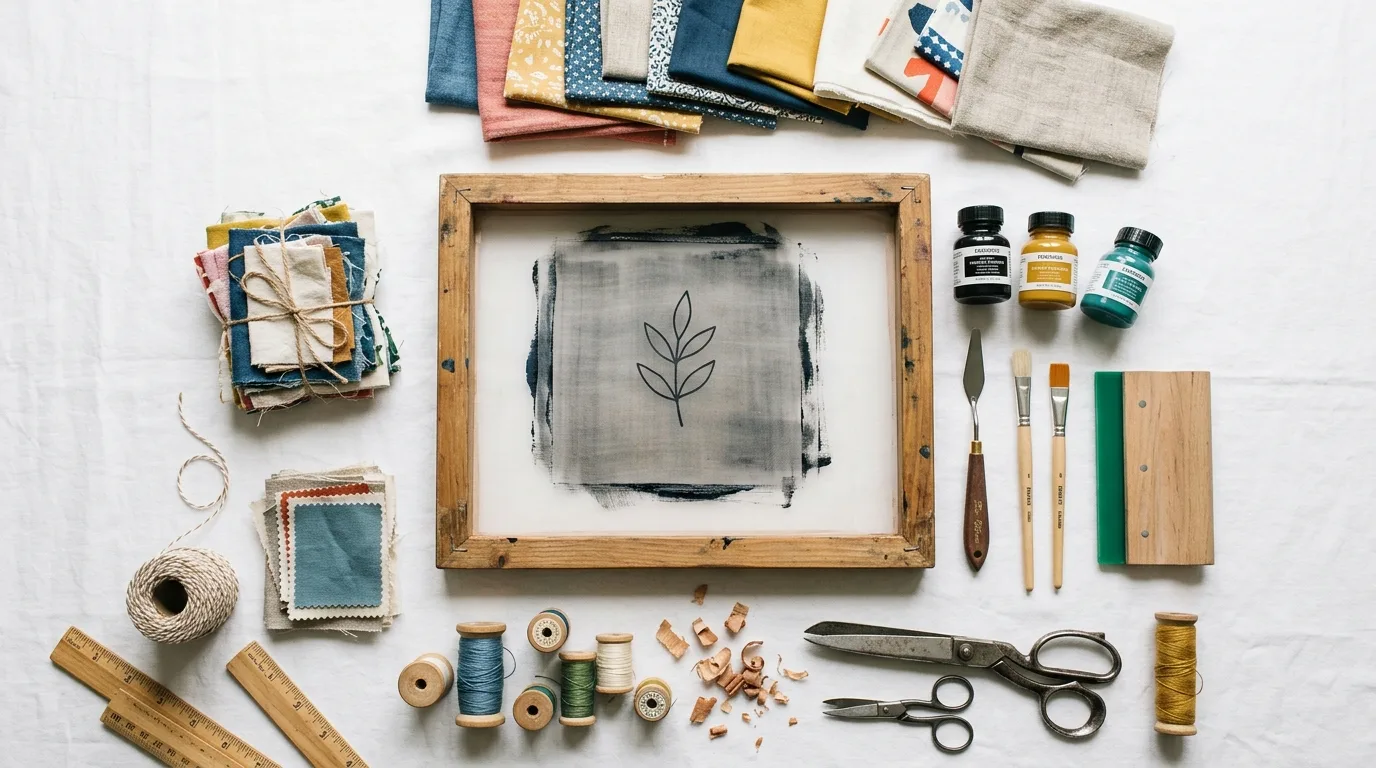
Craft materials laid out on a DIY workshop table
No. 01WORKSHOPSApril 12, 2026

Top DIY Workshops at Baltimore's Annual Maker Fest

A guide to the hands-on workshops that define Baltimore D.I.Y. Fest, from bike repair to urban foraging, and why they matter to the maker community.
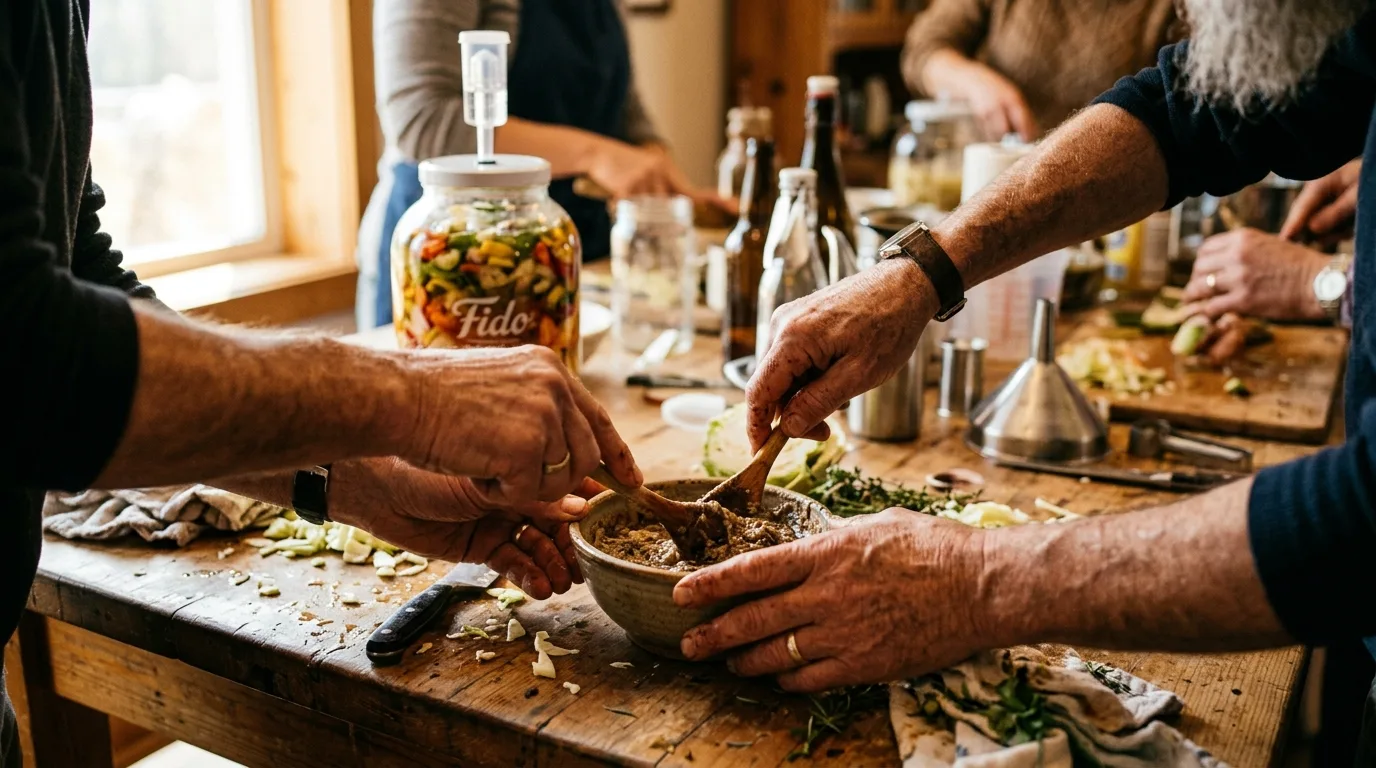
Hands working at a community craft workshop

Every September, a church hall on St. Paul Street fills up with people who want to learn something they have never tried before. That is the heart of Baltimore D.I.Y. Fest. Since its early years, the festival has packed its schedule with hands-on workshops taught not by professors or paid instructors but by neighbors, people who picked up a skill and decided to pass it on for free.

This guide walks through the workshop categories that have made DIY Fest a Baltimore staple, what to expect when you show up, and how to get the most out of a single afternoon of learning.

Why Workshops Are the Core of DIY Fest

Most festivals are built around passive consumption: you watch a band, you browse vendor tables, you eat food. DIY Fest flips that model. The workshops are the main event. Every session is participatory. You leave with a skill, a project, or at minimum a hands-on introduction to something new.

The format is low pressure by design. Sessions run in short windows, attendance is open, and there is no gate between beginners and more practiced participants. Someone teaching knife making one year might be sitting in on a beekeeping intro the next. That cross-pollination of curiosity is what keeps the workshop schedule interesting across all nine-plus years the festival has run.

Practical Skills You Can Actually Use

Some of the most consistently popular workshops at DIY Fest fall into the practical skills category, things you might otherwise pay someone else to do.

Bike repair workshops draw a steady crowd because Baltimore is a cycling city with a real need for affordable maintenance knowledge. A one-hour session covering tire changes, brake adjustments, and basic cable tension can save riders real money over a season.

Drywall repair is another perennial. Anyone who has rented or owned in Baltimore knows walls take damage. Showing up to a free 45-minute session and walking out knowing how to patch a hole is exactly the kind of exchange DIY Fest was built around.

Home repair skills have always been part of the festival's identity. The idea that you can learn to fix something rather than replace it, or call someone to replace it for you, is deeply practical and also politically meaningful. Skill sharing is resource sharing.

Food and Fermentation Workshops

Beer making, kombucha brewing, and urban foraging workshops tend to fill up fast. There is a genuine hunger (literal and otherwise) in Baltimore for food knowledge that goes beyond what you pick up in a grocery store.

Kombucha making workshops walk participants through the basics of fermentation culture, vessel preparation, and the timing required to produce a drink that is both shelf-stable and actually tasty. It is a surprisingly accessible skill and one that translates directly to daily life once you leave the festival grounds.

Urban foraging sessions pair well with the broader DIY ethos. Baltimore has green corridors, parks, and pocket lots where edible plants grow without anyone tending them. Learning to identify and responsibly harvest those plants is both a practical skill and a way of relating differently to the city you already live in.

Beer making workshops have ranged from extract-based introductions to more advanced all-grain setups. The point is never to turn attendees into professional brewers, it is to demystify a process that many people assume requires expensive equipment or formal training.

Craft and Making Workshops

The craft side of DIY Fest covers a lot of ground. Candle making, hula hoop construction, pop-up card making, yarnbombing, Japanese stab binding, and screen printing have all appeared on past schedules.

Environmentally friendly screen printing workshops are worth highlighting because they address a real gap. Conventional screen printing uses chemicals and processes that are hard to scale down to a home or community studio. The versions taught at DIY Fest tend to focus on water-based inks and low-waste setups that work on a small table, not a factory floor.

Japanese stab binding introduces participants to a bookbinding method that produces beautiful handmade journals and sketchbooks using basic materials: paper, a needle, waxed thread, and a cover. It is the kind of workshop where you arrive not knowing what stab binding is and leave holding something you made yourself.

Yarnbombing, the practice of covering public objects with knitted or crocheted material, has appeared at DIY Fest as both a craft workshop and a discussion about public art, permission, and community beautification. It is one of those topics that looks light on the surface and turns out to carry more weight the longer you talk about it.

Health and Wellness Workshops

DIY Fest has consistently included workshops that address health as a practical, learnable subject rather than something delegated entirely to professionals. Past sessions have covered infant care, basic pet care, women's health and birth control options, and self-defense.

Self-defense workshops are particularly valuable in a community festival context because they reach people who might not seek out formal martial arts classes. A two-hour session focused on awareness, boundary-setting, and a handful of physical responses gives participants a foundation that costs nothing beyond showing up.

The women's health workshops have addressed topics including contraception options and reproductive health basics, subjects that benefit enormously from peer-to-peer conversation in an accessible, non-clinical setting.

Wild Skills: Animal Skinning, Cordage, and Friction Fire

Some workshops at DIY Fest fall into a category that is harder to name but easy to recognize: skills that most people living in cities have no framework for at all.

Animal skinning, cordage making, and friction fire workshops come from a land-skills tradition that urban communities rarely encounter. These sessions tend to draw curious attendees who are not necessarily planning to skin animals or start fires by hand in their apartment, the draw is reconnecting with knowledge that existed for most of human history and has mostly been lost in one or two generations.

Friction fire in particular is one of those skills where understanding the physics, the right wood pairings, the geometry of the notch, the role of humidity, is almost as valuable as the physical practice. Workshops that explain the why alongside the how tend to stick with attendees long after the afternoon is over.

How to Get the Most Out of a Workshop Day

Show up early. The most popular sessions fill the available space quickly, and there is usually no advance registration system for individual workshops. Walking through the schedule at the door and mapping out your afternoon is worth five minutes of planning.

Bring something to take notes with. It sounds obvious but is easy to forget. Workshops move fast, instructors have a lot to cover in a short window, and the specific ratios, sequences, or supply lists for a given project are easy to lose in memory by the time you get home.

Talk to the person teaching. Workshop leaders at DIY Fest are community members, not performers. Most of them are happy to answer follow-up questions, point you toward resources, or tell you where they learned what they are now teaching. Those side conversations are often the most valuable part of the day.

Come back the following year. DIY Fest rotates its workshop offerings. Skills that appeared one year may not show up the next, and entirely new topics appear as new community members step up to share what they know. The festival's decade-plus run reflects a community that keeps showing up, and keeps finding new things worth teaching.
No. 02ORGANIZINGMarch 8, 2026

How to Start Your Own Local DIY Fest: A Community Organizer's Guide

Practical steps for organizing a free community DIY festival in your city, drawn from the decade-long example of Baltimore D.I.Y. Fest and the grassroots maker movement.

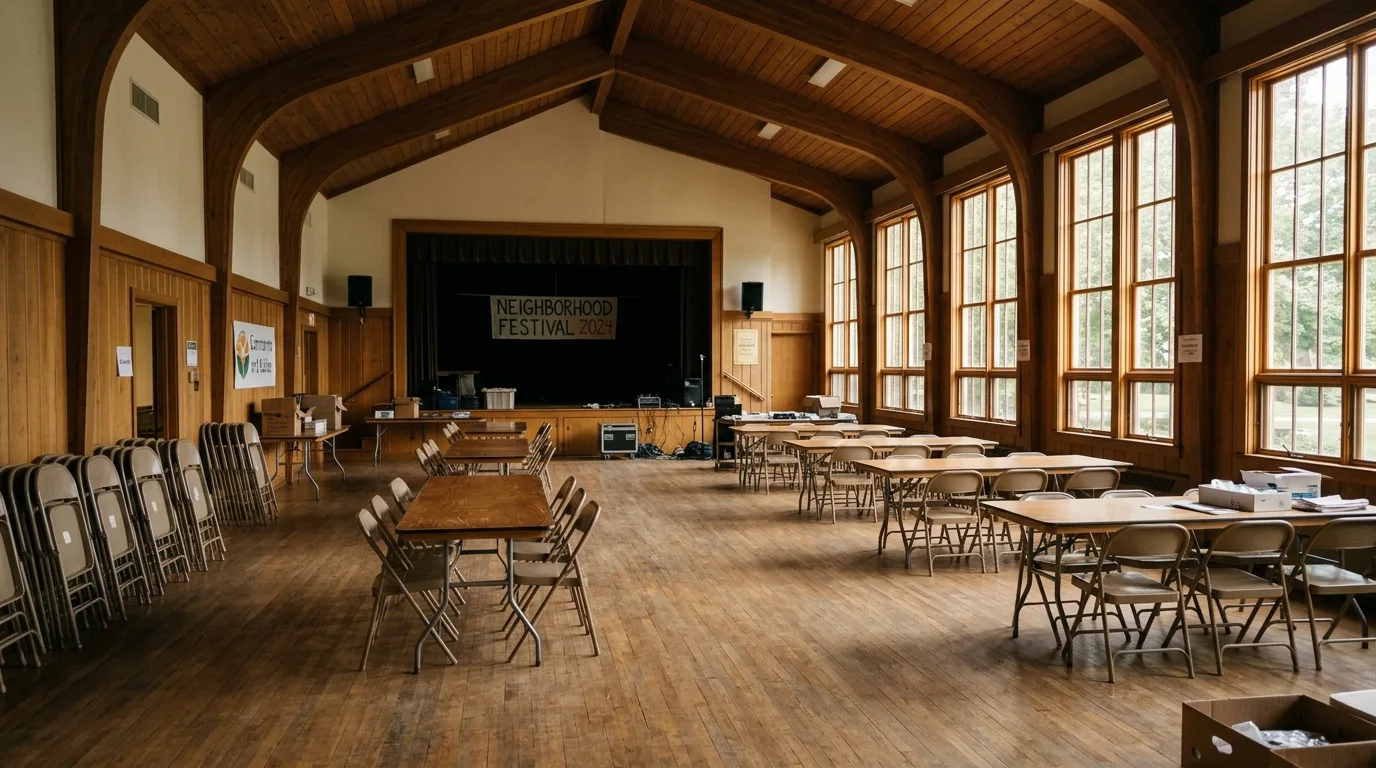
Community hall set up for a neighborhood festival

The Baltimore D.I.Y. Fest has been running for over nine years. For most of that time it has been organized by four people. It is free to attend. It fills a church hall with workshops, makers, craft vendors, and curious neighbors every September. And it has grown not through sponsorship deals or marketing budgets but through word of mouth and a genuinely open call: if you have a skill, come teach it.

That model is replicable. If you want to build something like it in your city or neighborhood, here is what the Baltimore example shows actually works.

Start With a Core Group, Not a Committee

The most durable community festivals are not run by committees with rotating membership and formal bylaws. They are run by a small group of people who trust each other, divide work clearly, and stay committed across multiple event cycles.

Baltimore D.I.Y. Fest has operated for years with four core organizers. Four people is not a magic number, but it points to something important: you need enough people that no single person burns out, and few enough people that decisions get made without endless coordination overhead.

Find two to four people who care about the same thing you care about, skill sharing, maker culture, free community education, or whatever your version of it is, and who are willing to commit time not just in the weeks before the event but in the months of planning that precede it. Everything else can be figured out as you go.

Choose a Venue That Matches Your Values

The venue you choose communicates something about what the event is. DIY Fest's longtime home at St. Johns Church on St. Paul Street in Baltimore works because it is a community-serving space, not a commercial one. It has multiple rooms that can run parallel workshops. It is accessible by transit. And it signals that the event belongs to the neighborhood.

When scouting venues, look for spaces that are already embedded in community life: church halls, community centers, school gymnasiums, union halls, public park pavilions. Avoid venues that carry a commercial or exclusive association, those spaces tend to attract the wrong crowd and repel the people you most want to reach.

Practical requirements for a workshop-based festival include:

  • Multiple separate rooms or defined zones for parallel programming
  • Tables and chairs that can be rearranged
  • Accessible bathrooms
  • Decent ventilation for craft activities that involve paint, adhesives, or heat
  • Loading access for makers who are bringing equipment or supplies

Free or low-cost venue access is achievable if you approach organizations that already have community-benefit mandates. Offer to promote their space in all event materials and to leave the venue cleaner than you found it.

Build Your Programming Through Open Calls

The best thing about the DIY festival format is that you do not have to book all the programming yourself. The community does it for you, if you ask clearly and make it easy.

An open call for workshop leaders should go out at least eight to ten weeks before the event. The call should specify:

  • What kinds of workshops you are looking for (hands-on, skill-based, no passive lectures)
  • How long each session will run
  • What setup support you can provide (tables, power outlets, materials storage)
  • The deadline for applications
  • A simple application form: name, contact, workshop title, brief description, materials needed

Similarly, an open call for tablers, people who want to display or demonstrate their DIY projects and crafts, should be clear about what "tabling" means at your event. DIY Fest specifically frames tabling as a way to share projects and engage people, not primarily as a sales venue. That distinction matters and should be stated explicitly in the call.

Past Baltimore workshops have included everything from bike repair and beer making to cordage making and Japanese stab binding. That range is a direct result of leaving the call genuinely open rather than pre-curating it toward a particular aesthetic or skill category.

Keep It Free

This is non-negotiable if your goal is genuine community access.

Free admission removes the barrier that price creates. It means someone who is curious but not committed can show up without making a financial calculation. It means the event draws from the full economic range of a neighborhood rather than a self-selected subset. It means you can promote it without any awkwardness about whether people can afford it.

Baltimore D.I.Y. Fest is free and has always been free, with donations accepted. That model works because the event's expenses are low: most of the programming comes from volunteers, the venue cost is minimal, and there is no paid performer or headliner whose fee has to be recovered from ticket sales.

You can keep costs low by:

  • Relying on volunteer workshop leaders who are contributing their time and knowledge
  • Asking tablers to bring their own supplies
  • Sourcing basic materials (tape, extension cords, signage) through donations or low-budget purchasing
  • Keeping printed collateral minimal, a simple printed schedule and a few directional signs are enough

Recruit Volunteers Early and Be Specific About Roles

Festival volunteers often get a vague ask: "we need help." That produces vague results. People are more likely to commit and to show up when the ask is specific.

Volunteer roles at a workshop-based festival typically include:

  • Door/entry: greeting attendees, handling any donation collection, directing people to the schedule
  • Room monitors: staying in a room throughout the day, managing flow, helping workshop leaders with setup and breakdown
  • Materials runner: fetching supplies, helping tablers unload, covering small logistical gaps as they arise
  • Social media/documentation: capturing photos or short video of workshops with attendee permission

Recruit volunteers through the same channels you use to recruit workshop leaders: direct community networks, neighborhood listservs, social media, and word of mouth through existing maker or craft communities. People who follow your event's social presence are already warm.

Promote Through Community Channels, Not Paid Advertising

DIY Fest has grown through community promotion: a website, a Facebook page, word of mouth, and the networks of everyone who participates. That is the right approach for an event whose identity is rooted in community.

Paid advertising creates a mismatch between how the event reaches people and what the event actually is. Someone who shows up because they saw a targeted ad is a different attendee than someone who showed up because a friend told them about a workshop they should not miss.

Invest your promotional energy in:

  • Emailing or messaging local maker spaces, bike co-ops, community gardens, crafting circles, and neighborhood organizations
  • Getting listed on community event calendars, most cities have multiple free options
  • Asking workshop leaders and tablers to spread the word in their own networks
  • Posting in neighborhood social media groups and forums

The goal is not reach in the broadcast sense. It is density of connection within the community you are actually trying to serve.

Build the Habit of Doing It Again

The most important thing Baltimore D.I.Y. Fest has done is come back every year. Nine-plus iterations of the same community event create something no single-year festival can: a tradition. Attendees plan for it. Workshop leaders come back with new ideas. The festival develops a shared memory that accumulates meaning over time.

Your first event will be imperfect. Probably the second one will be too. That is fine. Document what worked, what fell apart, and what you would do differently. Debrief with your core team within a week while everything is fresh. Apply what you learned to the next cycle.

A local DIY fest built on genuine community participation, free access, and a habit of return can run for a decade on the energy of four committed people and a willing neighborhood. Baltimore is proof.


No. 03CRAFT + SUSTAINABILITYFebruary 1, 2026

Recycled Art and Sustainable Crafting in Baltimore's Maker Scene

How Baltimore makers and DIY community events are building a culture of sustainable crafting through recycled art, low-waste making, and material reuse.

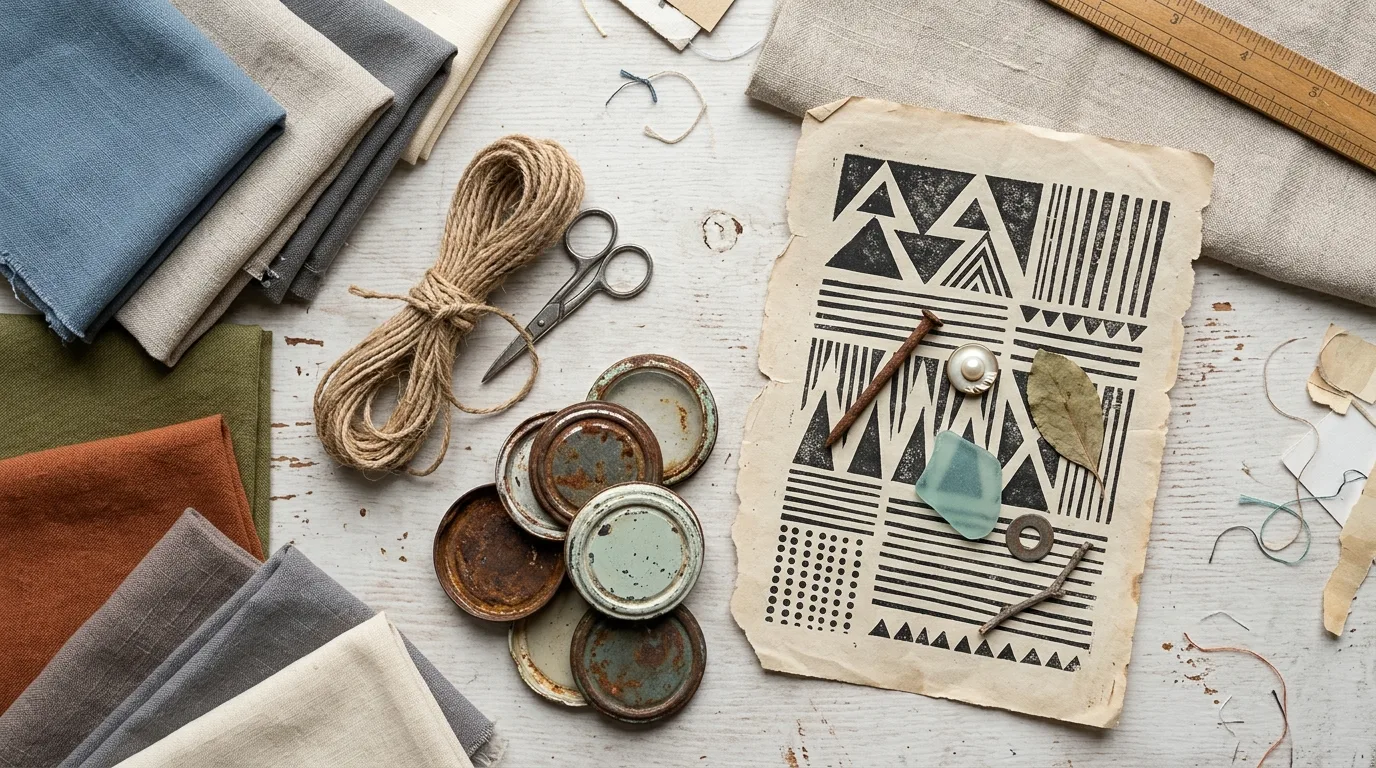
Salvaged and recycled craft materials arranged on a surface

Walk through a DIY festival in Baltimore and you will notice something about the materials on the tables: a lot of them started life as something else. Fabric scraps that were heading for a landfill. Glass jars repurposed as organizers and display cases. Paper salvaged from print overruns. Screen printing setups running water-based inks instead of petroleum-derived ones.

This is not accidental. Baltimore's maker community has always had a practical relationship with material reuse. Part of that comes from the economics of making on a budget. Part of it comes from a genuine ethic of sustainability that runs through the DIY movement. And part of it is simply that working with found or salvaged materials produces more interesting work than buying everything new from a craft supply store.

What Recycled Art Actually Means in Practice

Recycled art is a broad category, and it is worth being specific. At its most meaningful, it does not mean gluing bottle caps to a canvas and calling it environmentally conscious. It means rethinking the material as a starting point rather than treating new materials as the default.

At DIY Fest, recycled art workshops have covered painting and craft projects built around salvaged or reclaimed materials. The emphasis is on technique that works with the material you have rather than requiring you to purchase a standardized supply. That shift in orientation changes how you approach a project from the beginning.

Some concrete approaches that have shown up in the Baltimore maker community:

  • Textile reuse: cutting up worn or donated clothing to use as canvas for screen printing, embroidery, or patchwork projects
  • Paper salvage: using single-sided printed paper, paper bags, and cardstock scraps as the base for bookbinding, collage, and printmaking
  • Container repurposing: glass jars, tin cans, and cardboard tubes as structural elements in sculpture, lighting, and storage projects
  • Found object assemblage: building three-dimensional work from hardware, electronics parts, broken tools, and other materials that would otherwise be discarded

Each of these approaches has a practical side and an aesthetic one. The constraints that come from working with imperfect or irregular materials often produce more interesting work than unlimited access to pristine supplies. Makers who work with salvaged materials develop an eye for potential that is genuinely useful across any creative discipline.

Environmentally Friendly Screen Printing

Screen printing is one of the craft disciplines where the environmental footprint can be substantial if you are using conventional methods. Plastisol inks contain PVC and phthalates. Solvent-based emulsions and cleaners generate chemical waste. The industrial version of screen printing is not a sustainable small-batch practice.

The workshops that have appeared at DIY Fest and in Baltimore's community maker spaces take a different approach. Water-based inks eliminate the most problematic chemical inputs. Photo emulsion alternatives based on gelatin or other natural binders reduce the chemical complexity of the exposure process. Simple reclaiming setups, a hose, a soft brush, and appropriate biodegradable cleaner, make it possible to reuse screens without generating significant waste.

For someone setting up a home or community studio, these adaptations also make economic sense. You do not need a professional washout booth. You do not need to dispose of chemical waste through a commercial channel. The simplified setup trades some of the consistency you would expect from industrial methods for a process that is genuinely manageable in a basement, garage, or small shared space.

What you sacrifice in going water-based is primarily opacity on very dark fabric, water-based inks do not sit on top of dark fabric the way plastisol does. That is a real limitation for some applications. For printing on natural fibers, lighter fabrics, and paper, however, water-based inks perform beautifully and require none of the chemical handling that makes conventional screen printing a headache for small-scale makers.

Urban Composting and the Craft Supply Chain

One of the less obvious connections between Baltimore's maker community and sustainable practice is in the relationship between urban composting and organic craft materials.

Urban composting workshops at DIY Fest address the basic mechanics: how to set up a bin, what goes in and what does not, how to manage moisture and aeration in a small-space system, and what to do with the finished compost. That knowledge is directly applicable to gardens, but it also connects to a broader understanding of material cycles that informs how makers think about waste.

A maker who understands decomposition is more likely to think about what happens to their project at end of life. Natural fiber textiles, paper, untreated wood, and plant-based dyes all break down in ways that synthetic alternatives do not. Choosing those materials from the start is a design decision with downstream consequences, and it is a decision that the DIY community is well-positioned to make intentionally.

The Economics of Sustainable Making

There is a persistent assumption that sustainable materials and methods cost more. In some cases, that is true. Organic cotton costs more per yard than conventional. Certified responsibly harvested wood has a higher price tag than commodity lumber.

But the equation shifts significantly when you factor in salvage and reuse. A maker who sources materials from thrift stores, estate sales, material exchanges, and community swaps operates with a fundamentally different cost structure than one who buys new. Baltimore has several material reuse organizations and exchange networks that funnel usable supplies, fabric, hardware, paper, tools, away from the waste stream and into community hands.

DIY Fest itself reflects this economics. The event costs nothing to attend. Workshop leaders bring their own materials or source them through community networks. Tablers bring projects built from whatever they had access to. The whole event runs on contributed time and salvaged or low-cost materials. That is a model worth examining closely because it works at a community scale in ways that individual sustainability choices cannot.

Teaching Sustainable Craft to New Makers

One of the most valuable things community festivals like DIY Fest do is introduce sustainable craft practices to people who have not yet formed habits around how they acquire and use materials.

A first-time candle maker who learns at a festival workshop to use natural waxes, lead-free cotton wicks, and repurposed containers is learning not just technique but a set of values embedded in that technique. A first-time screen printer who learns water-based methods has never learned the chemical-intensive alternative, for them, sustainable practice is just practice.

That normalization effect compounds over time. Makers who started at community workshops go on to teach others, run their own studios, and shape what the local maker community considers standard practice. Baltimore's DIY ecosystem has been building that knowledge base for over a decade, one workshop at a time.

Getting Involved

The Baltimore maker and sustainable craft community is accessible in ways that more formal creative institutions are not. DIY Fest is the most visible point of entry, but it connects to a broader network: community gardens that run crafting programs, material reuse organizations, bike co-ops that teach repair alongside art fabrication, and informal skill-sharing circles that meet in living rooms and public parks.

The common thread is the same one that runs through DIY Fest itself: the belief that skills and materials should be shared, that learning happens in community, and that what you make with your hands connects you to a place and a set of people in ways that consumption never can.

Baltimore's recycled art and sustainable crafting community is not a niche. It is the mainstream of what the city's maker culture is actually doing.