How to Start Your Own Local DIY Fest: A Community Organizer's Guide
Practical steps for organizing a free community DIY festival in your city, drawn from the decade-long example of Baltimore D.I.Y. Fest and the grassroots maker movement.
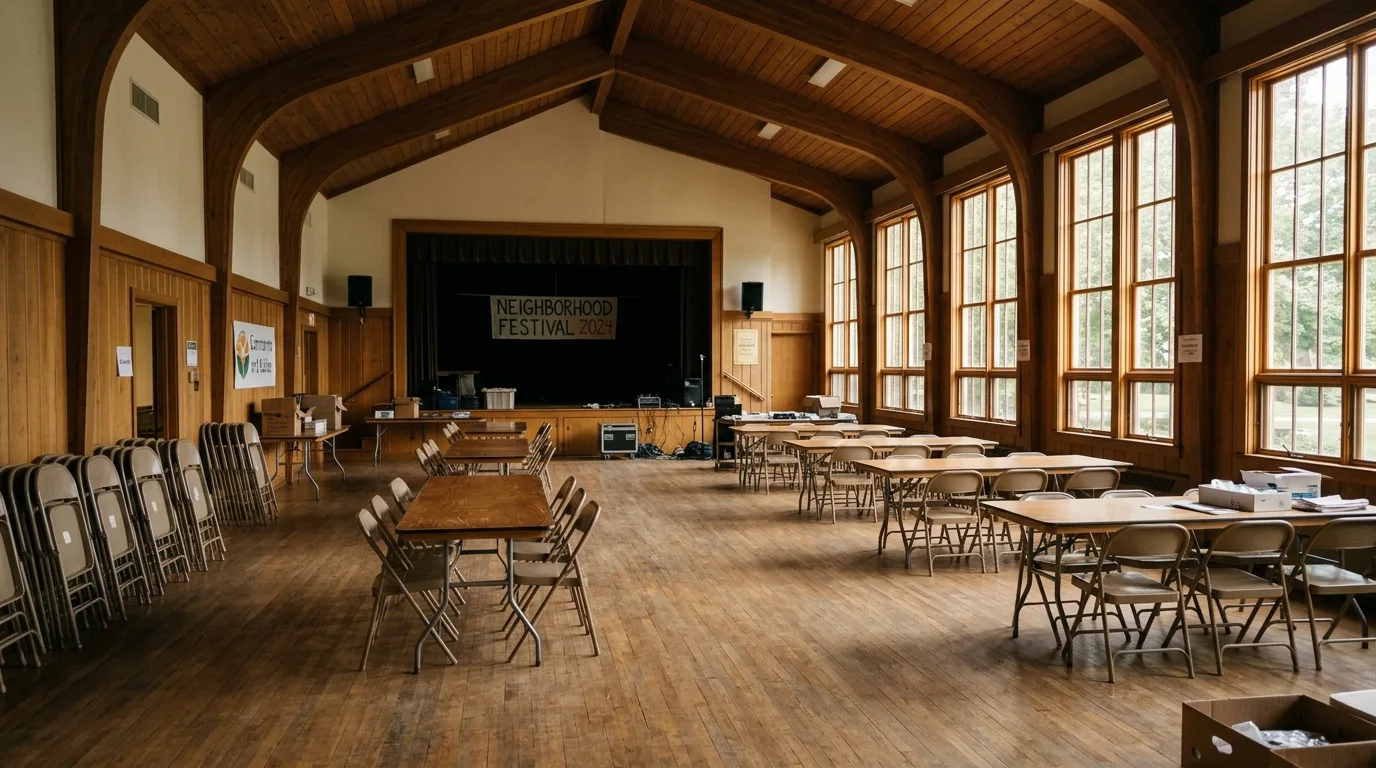
The Baltimore D.I.Y. Fest has been running for over nine years. For most of that time it has been organized by four people. It is free to attend. It fills a church hall with workshops, makers, craft vendors, and curious neighbors every September. And it has grown not through sponsorship deals or marketing budgets but through word of mouth and a genuinely open call: if you have a skill, come teach it.
That model is replicable. If you want to build something like it in your city or neighborhood, here is what the Baltimore example shows actually works.
Start With a Core Group, Not a Committee
The most durable community festivals are not run by committees with rotating membership and formal bylaws. They are run by a small group of people who trust each other, divide work clearly, and stay committed across multiple event cycles.
Baltimore D.I.Y. Fest has operated for years with four core organizers. Four people is not a magic number, but it points to something important: you need enough people that no single person burns out, and few enough people that decisions get made without endless coordination overhead.
Find two to four people who care about the same thing you care about, skill sharing, maker culture, free community education, or whatever your version of it is, and who are willing to commit time not just in the weeks before the event but in the months of planning that precede it. Everything else can be figured out as you go.
Choose a Venue That Matches Your Values
The venue you choose communicates something about what the event is. DIY Fest's longtime home at St. Johns Church on St. Paul Street in Baltimore works because it is a community-serving space, not a commercial one. It has multiple rooms that can run parallel workshops. It is accessible by transit. And it signals that the event belongs to the neighborhood.
When scouting venues, look for spaces that are already embedded in community life: church halls, community centers, school gymnasiums, union halls, public park pavilions. Avoid venues that carry a commercial or exclusive association, those spaces tend to attract the wrong crowd and repel the people you most want to reach.
Practical requirements for a workshop-based festival include:
- Multiple separate rooms or defined zones for parallel programming
- Tables and chairs that can be rearranged
- Accessible bathrooms
- Decent ventilation for craft activities that involve paint, adhesives, or heat
- Loading access for makers who are bringing equipment or supplies
Free or low-cost venue access is achievable if you approach organizations that already have community-benefit mandates. Offer to promote their space in all event materials and to leave the venue cleaner than you found it.
Build Your Programming Through Open Calls
The best thing about the DIY festival format is that you do not have to book all the programming yourself. The community does it for you, if you ask clearly and make it easy.
An open call for workshop leaders should go out at least eight to ten weeks before the event. The call should specify:
- What kinds of workshops you are looking for (hands-on, skill-based, no passive lectures)
- How long each session will run
- What setup support you can provide (tables, power outlets, materials storage)
- The deadline for applications
- A simple application form: name, contact, workshop title, brief description, materials needed
Similarly, an open call for tablers, people who want to display or demonstrate their DIY projects and crafts, should be clear about what "tabling" means at your event. DIY Fest specifically frames tabling as a way to share projects and engage people, not primarily as a sales venue. That distinction matters and should be stated explicitly in the call.
Past Baltimore workshops have included everything from bike repair and beer making to cordage making and Japanese stab binding. That range is a direct result of leaving the call genuinely open rather than pre-curating it toward a particular aesthetic or skill category.
Keep It Free
This is non-negotiable if your goal is genuine community access.
Free admission removes the barrier that price creates. It means someone who is curious but not committed can show up without making a financial calculation. It means the event draws from the full economic range of a neighborhood rather than a self-selected subset. It means you can promote it without any awkwardness about whether people can afford it.
Baltimore D.I.Y. Fest is free and has always been free, with donations accepted. That model works because the event's expenses are low: most of the programming comes from volunteers, the venue cost is minimal, and there is no paid performer or headliner whose fee has to be recovered from ticket sales.
You can keep costs low by:
- Relying on volunteer workshop leaders who are contributing their time and knowledge
- Asking tablers to bring their own supplies
- Sourcing basic materials (tape, extension cords, signage) through donations or low-budget purchasing
- Keeping printed collateral minimal, a simple printed schedule and a few directional signs are enough
Recruit Volunteers Early and Be Specific About Roles
Festival volunteers often get a vague ask: "we need help." That produces vague results. People are more likely to commit and to show up when the ask is specific.
Volunteer roles at a workshop-based festival typically include:
- Door/entry: greeting attendees, handling any donation collection, directing people to the schedule
- Room monitors: staying in a room throughout the day, managing flow, helping workshop leaders with setup and breakdown
- Materials runner: fetching supplies, helping tablers unload, covering small logistical gaps as they arise
- Social media/documentation: capturing photos or short video of workshops with attendee permission
Recruit volunteers through the same channels you use to recruit workshop leaders: direct community networks, neighborhood listservs, social media, and word of mouth through existing maker or craft communities. People who follow your event's social presence are already warm.
Promote Through Community Channels, Not Paid Advertising
DIY Fest has grown through community promotion: a website, a Facebook page, word of mouth, and the networks of everyone who participates. That is the right approach for an event whose identity is rooted in community.
Paid advertising creates a mismatch between how the event reaches people and what the event actually is. Someone who shows up because they saw a targeted ad is a different attendee than someone who showed up because a friend told them about a workshop they should not miss.
Invest your promotional energy in:
- Emailing or messaging local maker spaces, bike co-ops, community gardens, crafting circles, and neighborhood organizations
- Getting listed on community event calendars, most cities have multiple free options
- Asking workshop leaders and tablers to spread the word in their own networks
- Posting in neighborhood social media groups and forums
The goal is not reach in the broadcast sense. It is density of connection within the community you are actually trying to serve.
Build the Habit of Doing It Again
The most important thing Baltimore D.I.Y. Fest has done is come back every year. Nine-plus iterations of the same community event create something no single-year festival can: a tradition. Attendees plan for it. Workshop leaders come back with new ideas. The festival develops a shared memory that accumulates meaning over time.
Your first event will be imperfect. Probably the second one will be too. That is fine. Document what worked, what fell apart, and what you would do differently. Debrief with your core team within a week while everything is fresh. Apply what you learned to the next cycle.
A local DIY fest built on genuine community participation, free access, and a habit of return can run for a decade on the energy of four committed people and a willing neighborhood. Baltimore is proof.