Top DIY Workshops at Baltimore's Annual Maker Fest
A guide to the hands-on workshops that define Baltimore D.I.Y. Fest, from bike repair to urban foraging, and why they matter to the maker community.
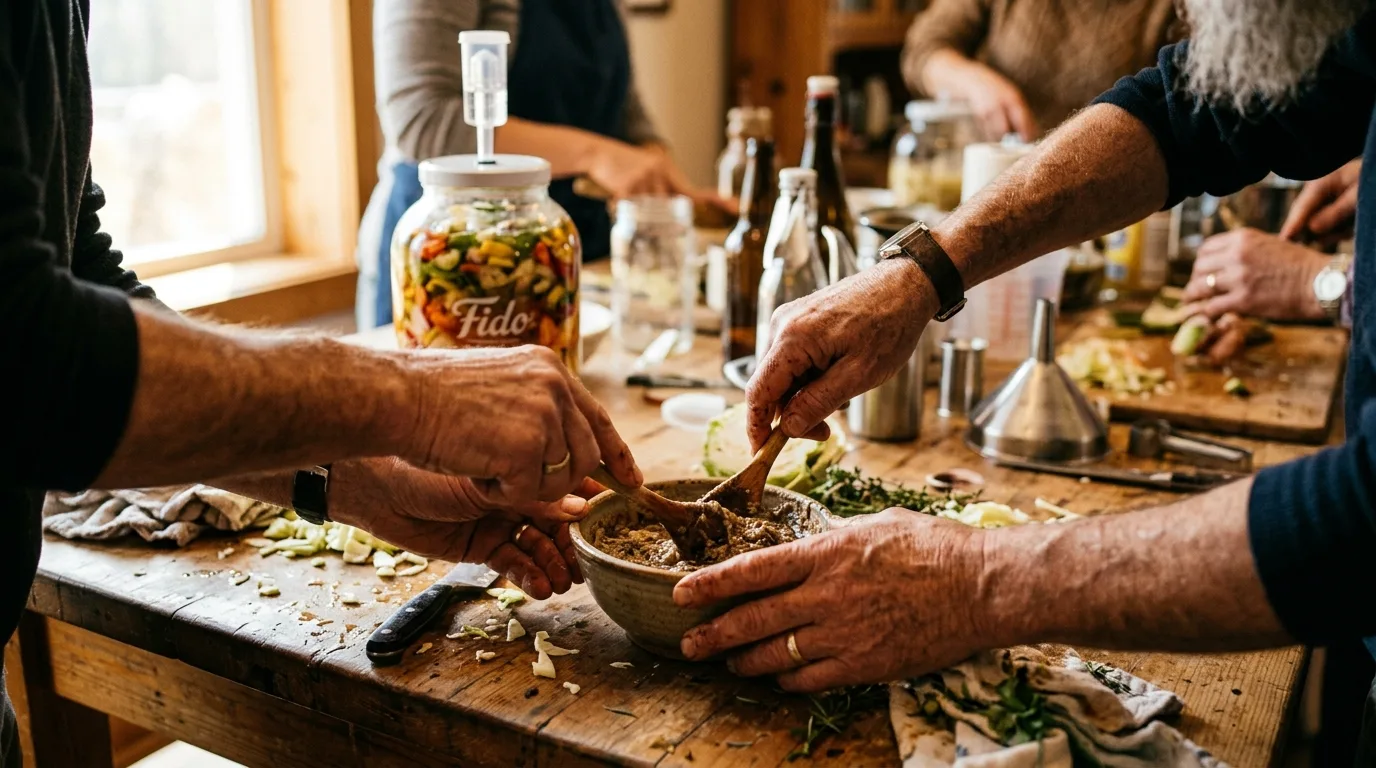
Every September, a church hall on St. Paul Street fills up with people who want to learn something they have never tried before. That is the heart of Baltimore D.I.Y. Fest. Since its early years, the festival has packed its schedule with hands-on workshops taught not by professors or paid instructors but by neighbors, people who picked up a skill and decided to pass it on for free.
This guide walks through the workshop categories that have made DIY Fest a Baltimore staple, what to expect when you show up, and how to get the most out of a single afternoon of learning.
Why Workshops Are the Core of DIY Fest
Most festivals are built around passive consumption: you watch a band, you browse vendor tables, you eat food. DIY Fest flips that model. The workshops are the main event. Every session is participatory. You leave with a skill, a project, or at minimum a hands-on introduction to something new.
The format is low pressure by design. Sessions run in short windows, attendance is open, and there is no gate between beginners and more practiced participants. Someone teaching knife making one year might be sitting in on a beekeeping intro the next. That cross-pollination of curiosity is what keeps the workshop schedule interesting across all nine-plus years the festival has run.
Practical Skills You Can Actually Use
Some of the most consistently popular workshops at DIY Fest fall into the practical skills category, things you might otherwise pay someone else to do.
Bike repair workshops draw a steady crowd because Baltimore is a cycling city with a real need for affordable maintenance knowledge. A one-hour session covering tire changes, brake adjustments, and basic cable tension can save riders real money over a season.
Drywall repair is another perennial. Anyone who has rented or owned in Baltimore knows walls take damage. Showing up to a free 45-minute session and walking out knowing how to patch a hole is exactly the kind of exchange DIY Fest was built around.
Home repair skills have always been part of the festival's identity. The idea that you can learn to fix something rather than replace it, or call someone to replace it for you, is deeply practical and also politically meaningful. Skill sharing is resource sharing.
Food and Fermentation Workshops
Beer making, kombucha brewing, and urban foraging workshops tend to fill up fast. There is a genuine hunger (literal and otherwise) in Baltimore for food knowledge that goes beyond what you pick up in a grocery store.
Kombucha making workshops walk participants through the basics of fermentation culture, vessel preparation, and the timing required to produce a drink that is both shelf-stable and actually tasty. It is a surprisingly accessible skill and one that translates directly to daily life once you leave the festival grounds.
Urban foraging sessions pair well with the broader DIY ethos. Baltimore has green corridors, parks, and pocket lots where edible plants grow without anyone tending them. Learning to identify and responsibly harvest those plants is both a practical skill and a way of relating differently to the city you already live in.
Beer making workshops have ranged from extract-based introductions to more advanced all-grain setups. The point is never to turn attendees into professional brewers, it is to demystify a process that many people assume requires expensive equipment or formal training.
Craft and Making Workshops
The craft side of DIY Fest covers a lot of ground. Candle making, hula hoop construction, pop-up card making, yarnbombing, Japanese stab binding, and screen printing have all appeared on past schedules.
Environmentally friendly screen printing workshops are worth highlighting because they address a real gap. Conventional screen printing uses chemicals and processes that are hard to scale down to a home or community studio. The versions taught at DIY Fest tend to focus on water-based inks and low-waste setups that work on a small table, not a factory floor.
Japanese stab binding introduces participants to a bookbinding method that produces beautiful handmade journals and sketchbooks using basic materials: paper, a needle, waxed thread, and a cover. It is the kind of workshop where you arrive not knowing what stab binding is and leave holding something you made yourself.
Yarnbombing, the practice of covering public objects with knitted or crocheted material, has appeared at DIY Fest as both a craft workshop and a discussion about public art, permission, and community beautification. It is one of those topics that looks light on the surface and turns out to carry more weight the longer you talk about it.
Health and Wellness Workshops
DIY Fest has consistently included workshops that address health as a practical, learnable subject rather than something delegated entirely to professionals. Past sessions have covered infant care, basic pet care, women's health and birth control options, and self-defense.
Self-defense workshops are particularly valuable in a community festival context because they reach people who might not seek out formal martial arts classes. A two-hour session focused on awareness, boundary-setting, and a handful of physical responses gives participants a foundation that costs nothing beyond showing up.
The women's health workshops have addressed topics including contraception options and reproductive health basics, subjects that benefit enormously from peer-to-peer conversation in an accessible, non-clinical setting.
Wild Skills: Animal Skinning, Cordage, and Friction Fire
Some workshops at DIY Fest fall into a category that is harder to name but easy to recognize: skills that most people living in cities have no framework for at all.
Animal skinning, cordage making, and friction fire workshops come from a land-skills tradition that urban communities rarely encounter. These sessions tend to draw curious attendees who are not necessarily planning to skin animals or start fires by hand in their apartment, the draw is reconnecting with knowledge that existed for most of human history and has mostly been lost in one or two generations.
Friction fire in particular is one of those skills where understanding the physics, the right wood pairings, the geometry of the notch, the role of humidity, is almost as valuable as the physical practice. Workshops that explain the why alongside the how tend to stick with attendees long after the afternoon is over.
How to Get the Most Out of a Workshop Day
Show up early. The most popular sessions fill the available space quickly, and there is usually no advance registration system for individual workshops. Walking through the schedule at the door and mapping out your afternoon is worth five minutes of planning.
Bring something to take notes with. It sounds obvious but is easy to forget. Workshops move fast, instructors have a lot to cover in a short window, and the specific ratios, sequences, or supply lists for a given project are easy to lose in memory by the time you get home.
Talk to the person teaching. Workshop leaders at DIY Fest are community members, not performers. Most of them are happy to answer follow-up questions, point you toward resources, or tell you where they learned what they are now teaching. Those side conversations are often the most valuable part of the day.
Come back the following year. DIY Fest rotates its workshop offerings. Skills that appeared one year may not show up the next, and entirely new topics appear as new community members step up to share what they know. The festival's decade-plus run reflects a community that keeps showing up, and keeps finding new things worth teaching.