Recycled Art and Sustainable Crafting in Baltimore's Maker Scene
How Baltimore makers and DIY community events are building a culture of sustainable crafting through recycled art, low-waste making, and material reuse.
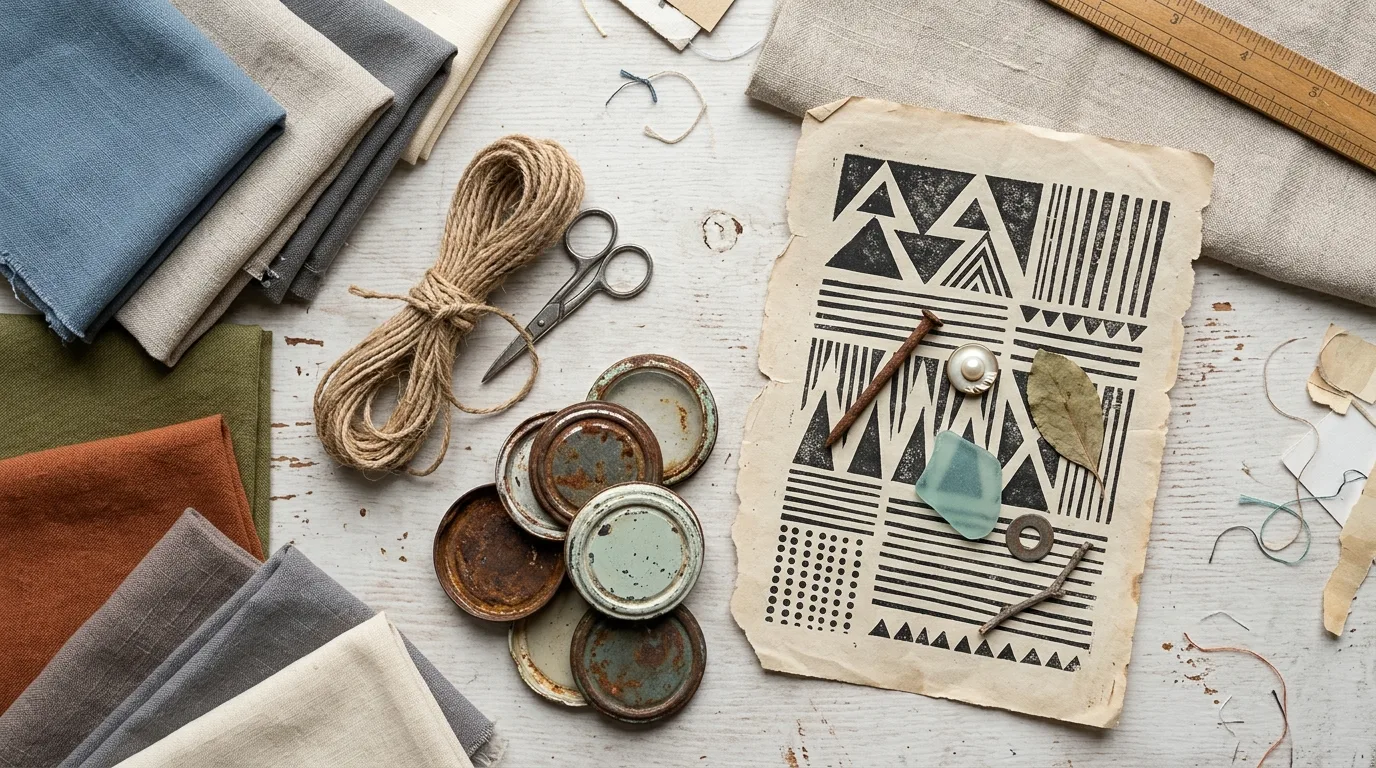
Walk through a DIY festival in Baltimore and you will notice something about the materials on the tables: a lot of them started life as something else. Fabric scraps that were heading for a landfill. Glass jars repurposed as organizers and display cases. Paper salvaged from print overruns. Screen printing setups running water-based inks instead of petroleum-derived ones.
This is not accidental. Baltimore's maker community has always had a practical relationship with material reuse. Part of that comes from the economics of making on a budget. Part of it comes from a genuine ethic of sustainability that runs through the DIY movement. And part of it is simply that working with found or salvaged materials produces more interesting work than buying everything new from a craft supply store.
What Recycled Art Actually Means in Practice
Recycled art is a broad category, and it is worth being specific. At its most meaningful, it does not mean gluing bottle caps to a canvas and calling it environmentally conscious. It means rethinking the material as a starting point rather than treating new materials as the default.
At DIY Fest, recycled art workshops have covered painting and craft projects built around salvaged or reclaimed materials. The emphasis is on technique that works with the material you have rather than requiring you to purchase a standardized supply. That shift in orientation changes how you approach a project from the beginning.
Some concrete approaches that have shown up in the Baltimore maker community:
- Textile reuse: cutting up worn or donated clothing to use as canvas for screen printing, embroidery, or patchwork projects
- Paper salvage: using single-sided printed paper, paper bags, and cardstock scraps as the base for bookbinding, collage, and printmaking
- Container repurposing: glass jars, tin cans, and cardboard tubes as structural elements in sculpture, lighting, and storage projects
- Found object assemblage: building three-dimensional work from hardware, electronics parts, broken tools, and other materials that would otherwise be discarded
Each of these approaches has a practical side and an aesthetic one. The constraints that come from working with imperfect or irregular materials often produce more interesting work than unlimited access to pristine supplies. Makers who work with salvaged materials develop an eye for potential that is genuinely useful across any creative discipline.
Environmentally Friendly Screen Printing
Screen printing is one of the craft disciplines where the environmental footprint can be substantial if you are using conventional methods. Plastisol inks contain PVC and phthalates. Solvent-based emulsions and cleaners generate chemical waste. The industrial version of screen printing is not a sustainable small-batch practice.
The workshops that have appeared at DIY Fest and in Baltimore's community maker spaces take a different approach. Water-based inks eliminate the most problematic chemical inputs. Photo emulsion alternatives based on gelatin or other natural binders reduce the chemical complexity of the exposure process. Simple reclaiming setups, a hose, a soft brush, and appropriate biodegradable cleaner, make it possible to reuse screens without generating significant waste.
For someone setting up a home or community studio, these adaptations also make economic sense. You do not need a professional washout booth. You do not need to dispose of chemical waste through a commercial channel. The simplified setup trades some of the consistency you would expect from industrial methods for a process that is genuinely manageable in a basement, garage, or small shared space.
What you sacrifice in going water-based is primarily opacity on very dark fabric, water-based inks do not sit on top of dark fabric the way plastisol does. That is a real limitation for some applications. For printing on natural fibers, lighter fabrics, and paper, however, water-based inks perform beautifully and require none of the chemical handling that makes conventional screen printing a headache for small-scale makers.
Urban Composting and the Craft Supply Chain
One of the less obvious connections between Baltimore's maker community and sustainable practice is in the relationship between urban composting and organic craft materials.
Urban composting workshops at DIY Fest address the basic mechanics: how to set up a bin, what goes in and what does not, how to manage moisture and aeration in a small-space system, and what to do with the finished compost. That knowledge is directly applicable to gardens, but it also connects to a broader understanding of material cycles that informs how makers think about waste.
A maker who understands decomposition is more likely to think about what happens to their project at end of life. Natural fiber textiles, paper, untreated wood, and plant-based dyes all break down in ways that synthetic alternatives do not. Choosing those materials from the start is a design decision with downstream consequences, and it is a decision that the DIY community is well-positioned to make intentionally.
The Economics of Sustainable Making
There is a persistent assumption that sustainable materials and methods cost more. In some cases, that is true. Organic cotton costs more per yard than conventional. Certified responsibly harvested wood has a higher price tag than commodity lumber.
But the equation shifts significantly when you factor in salvage and reuse. A maker who sources materials from thrift stores, estate sales, material exchanges, and community swaps operates with a fundamentally different cost structure than one who buys new. Baltimore has several material reuse organizations and exchange networks that funnel usable supplies, fabric, hardware, paper, tools, away from the waste stream and into community hands.
DIY Fest itself reflects this economics. The event costs nothing to attend. Workshop leaders bring their own materials or source them through community networks. Tablers bring projects built from whatever they had access to. The whole event runs on contributed time and salvaged or low-cost materials. That is a model worth examining closely because it works at a community scale in ways that individual sustainability choices cannot.
Teaching Sustainable Craft to New Makers
One of the most valuable things community festivals like DIY Fest do is introduce sustainable craft practices to people who have not yet formed habits around how they acquire and use materials.
A first-time candle maker who learns at a festival workshop to use natural waxes, lead-free cotton wicks, and repurposed containers is learning not just technique but a set of values embedded in that technique. A first-time screen printer who learns water-based methods has never learned the chemical-intensive alternative, for them, sustainable practice is just practice.
That normalization effect compounds over time. Makers who started at community workshops go on to teach others, run their own studios, and shape what the local maker community considers standard practice. Baltimore's DIY ecosystem has been building that knowledge base for over a decade, one workshop at a time.
Getting Involved
The Baltimore maker and sustainable craft community is accessible in ways that more formal creative institutions are not. DIY Fest is the most visible point of entry, but it connects to a broader network: community gardens that run crafting programs, material reuse organizations, bike co-ops that teach repair alongside art fabrication, and informal skill-sharing circles that meet in living rooms and public parks.
The common thread is the same one that runs through DIY Fest itself: the belief that skills and materials should be shared, that learning happens in community, and that what you make with your hands connects you to a place and a set of people in ways that consumption never can.
Baltimore's recycled art and sustainable crafting community is not a niche. It is the mainstream of what the city's maker culture is actually doing.